As the Formula 1 circus prepares to descend upon the historic asphalt of Silverstone before heading into the rolling hills of Spa-Francorchamps, the technical war in the paddock has reached a boiling point. The European leg of the championship has traditionally served as the definitive battleground for mid-season updates, but the stakes have been raised exponentially by an intriguing revelation from within the Scuderia. Lewis Hamilton has ignited intense speculation across the motorsport world by shedding light on a highly anticipated aerodynamic upgrade that Ferrari is poised to unleash. Far from the typical cautious corporate rhetoric, the British champion suggested that this upcoming package possesses the raw performance potential to force their rivals into a bitter acceptance of defeat. Rather than relying on mere sensationalism, analyzing Hamilton’s insights alongside the subsequent technical clarifications from Ferrari’s leadership reveals a deeply calculated, logical engineering narrative that could alter the trajectory of the entire competitive order.
According to Hamilton, this major development is not a sudden, reactive experiment, but the culmination of a rigorous, long-term engineering odyssey. The baseline concepts of this specific component were subtly evaluated as early as the pre-season winter testing in Bahrain and further assessed during evaluations in Shanghai. The initial iterations of the design, however, encountered significant real-world complications. Early telemetry indicated that a crucial rotating flap system operated far too slowly, creating an erratic aerodynamic imbalance at the rear of the car under heavy braking. In the high-velocity, high-stakes environment of modern Formula 1, even a microsecond delay in aerodynamic actuation can destabilize the rear axle, destroying driver confidence and compromising lap times. Ferrari’s engineering department chose to go back to the drawing board, redesigning the mechanism entirely to eliminate this latency. The revised components are now structurally sound and optimized to deliver instantaneous adaptation, allowing the car to effortlessly break away on long straights while maintaining ironclad stability. Furthermore, this dynamic system is expected to simultaneously maximize mechanical and aerodynamic grip through sharp, low-speed corners, solving a traditional compromise that has plagued recent ground-effect designs.
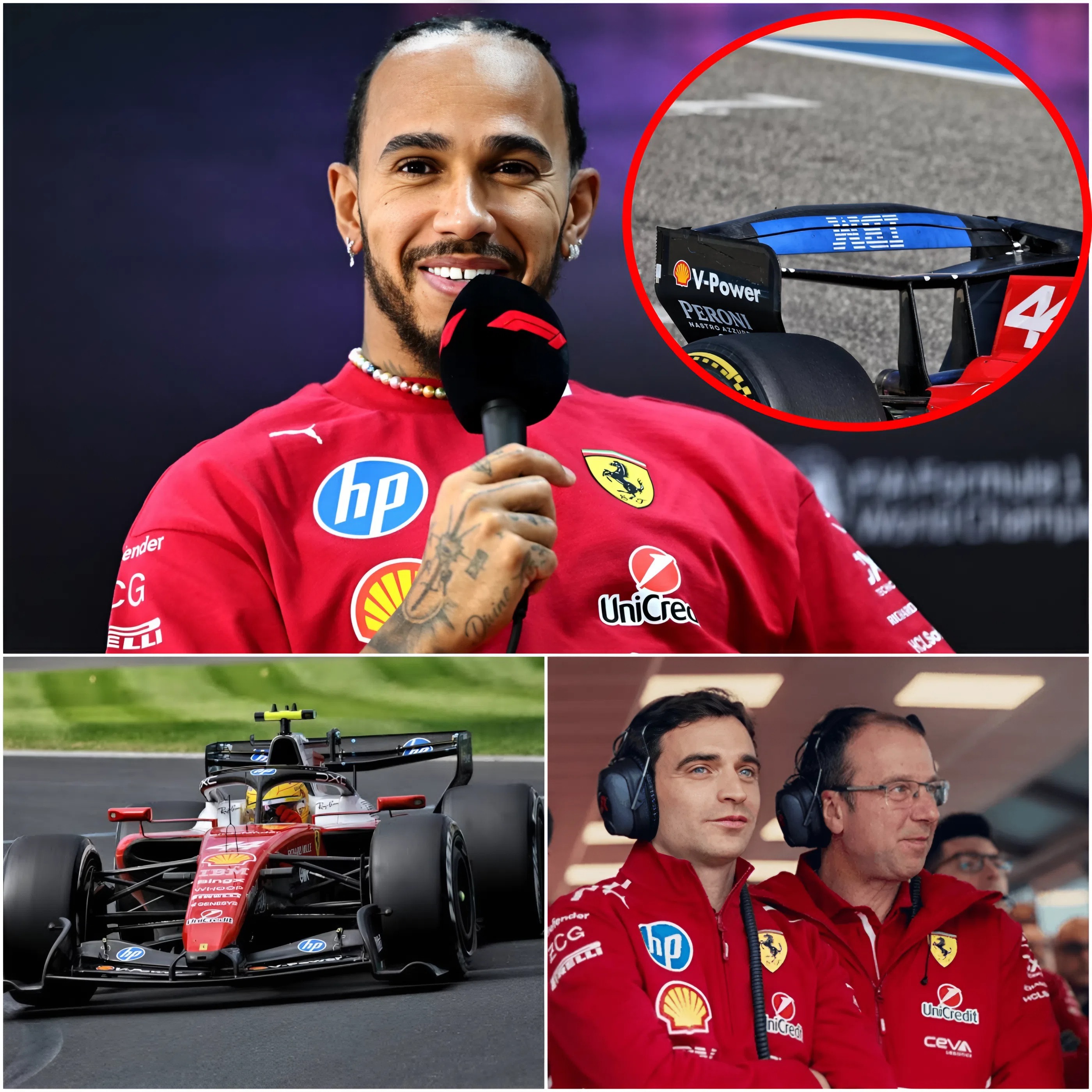
While the paddock has quickly labeled this upgrade a potential blockbuster, Ferrari’s technical department is approaching the upcoming races with a posture of methodical restraint. Newly appointed Technical Director Loïc Serra publicly addressed the speculation, emphasizing that the team refuses to become complacent or overly reliant on a singular, silver-bullet upgrade. Serra’s philosophy underscores the reality that true sustainable pace in contemporary Formula 1 stems from holistic aerodynamic harmony rather than isolated mechanical innovations. To complement the core upgrade mentioned by Hamilton, Serra revealed a comprehensive suite of targeted modifications meticulously tailored to handle the brutal, high-energy demands of circuits like Silverstone and Spa.
At the forefront of these structural revisions is a thoroughly redesigned low-drag diffuser. The engineering challenge of Silverstone lies in its paradoxical layout, requiring immense downforce through winding complexes while demanding minimum drag on the straights. Ferrari’s new diffuser geometry aims to solve this equation by maintaining a highly stable underbody downforce map even as the chassis undergoes violent lateral load transfers. This is particularly crucial through the notorious, ultra-high-speed Maggotts-Becketts-Chapel complex, where cars enter at over 290 kilometers per hour. By ensuring the airflow under the car does not detach during rapid direction changes, the driver can carry far more entry speed into the corner sequence. Once the car exits Chapel and opens up onto the Hangar Straight, the diffuser is designed to shed superfluous vortex drag, cleanly releasing the wake to maximize top-end acceleration.

In tandem with the underbody optimization, Ferrari has overhauled the geometry of its exhaust system. Silverstone is famous not only for its blistering speeds but also for its unpredictable, cool British climate. Lower ambient tracks and brisk atmospheric conditions can heavily impact the thermal efficiency of the power unit’s turbocharger. By modifying the structural pathways of the exhaust piping, Ferrari’s power unit division has successfully optimized the pressure dynamics of the exiting exhaust gases. This increased pressure efficiency allows the turbocharger to spool up and deploy electrical energy from the MGU-H much more effectively, mitigating the traditional performance drop-off associated with lower operating temperatures. It ensures that the hybrid system remains potent and responsive throughout the lap, giving the drivers a crucial edge during critical overtaking maneuvers.
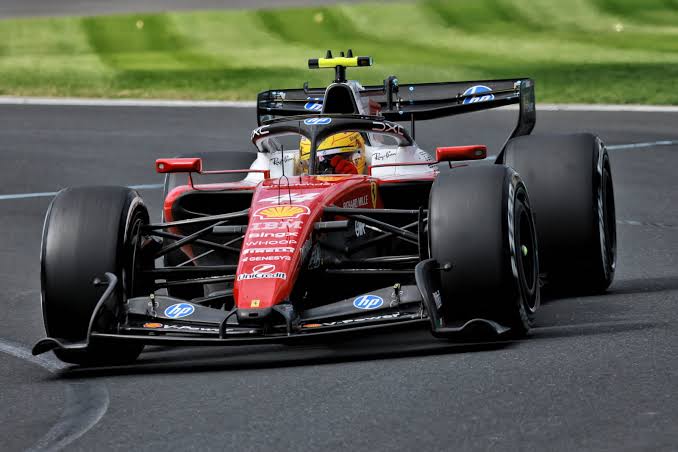
Complementing these internal changes are significant alterations to the external bodywork. Detailed technical reports filtering out from Maranello indicate that Ferrari is set to heavily refine, or entirely eliminate, the distinct fish-fin louvers, often referred to as the FTM (Fins for Thermal Management), located along the sidepods and engine cover. The traditional louvered cooling chimneys, while excellent for heat rejection in hot climates, create massive amounts of turbulent, detached airflow along the flanks of the car, increasing total drag. For the long, punishing straights of Silverstone and Spa, where energy deployment is continuous and aerodynamic efficiency is paramount, Ferrari has opted for a much cleaner, streamlined bodywork configuration. This new philosophy channels the hot internal air directly into a redesigned rear cooling exit in a far more compact manner. This tight packaging reduces the car’s overall frontal area and boundary-layer drag, allowing the SF-24 to sustain high speeds across extended straight-line sections without overheating the internal hybrid components.
When looking at the synergy between Hamilton’s insights regarding the perfected variable flap mechanism and Serra’s multi-layered aerodynamic overhaul, the logic behind Ferrari’s optimism becomes clear. The Italian squad is not simply adding downforce; they are systematically targeting the exact weaknesses that have prevented them from consistently challenging for victories on high-speed, front-limited circuits. If the dynamic updates work in perfect harmony with the low-drag diffuser and optimized exhaust, Ferrari will possess a machine that is uniquely versatile—agile enough to conquer low-speed chicanes, stable enough to navigate legendary high-speed sweeps, and efficient enough to defend against DRS threats on the straights. It is this comprehensive engineering attack that makes Hamilton’s assertion resonate so deeply across the paddock.
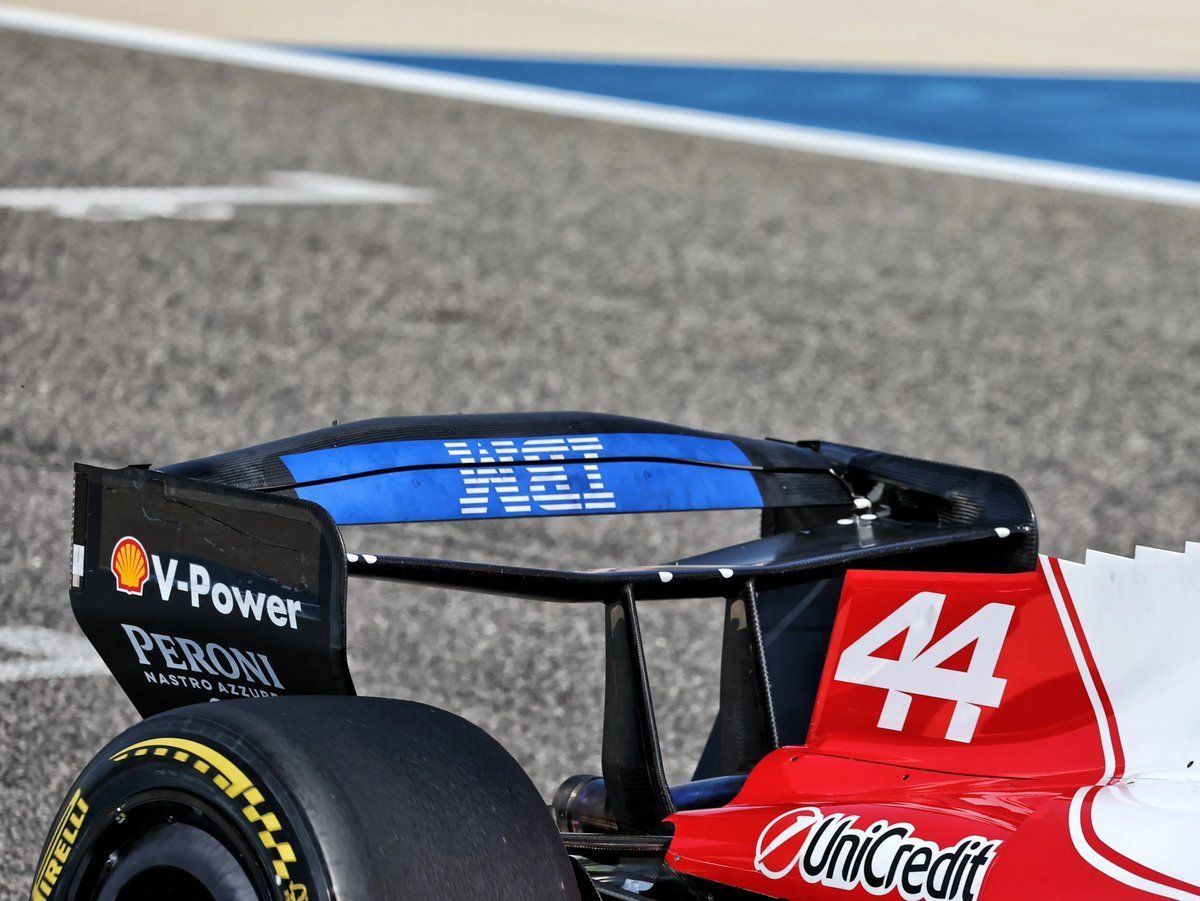
As the teams unpack their freight in the garage bays of Silverstone, the anticipation among the Tifosi and objective motorsport enthusiasts has reached a fever pitch. Formula 1 is a sport won in the margins of millimeters and milliseconds, and Ferrari appears to have left no stone unturned in their pursuit of absolute performance. Whether this formidable technical package will deliver the decisive blow that Hamilton predicts remains to be seen on the asphalt, but it has undeniably set the stage for an epic technical showdown.
Given the immense complexity of modern ground-effect regulations, do you believe Ferrari’s multi-layered approach of combining active flap stability with low-drag diffuser modifications will be enough to finally dethrone their rivals at high-speed tracks, or will the unpredictable nature of mid-season upgrades introduce new balance issues that could derail their championship ambitions?